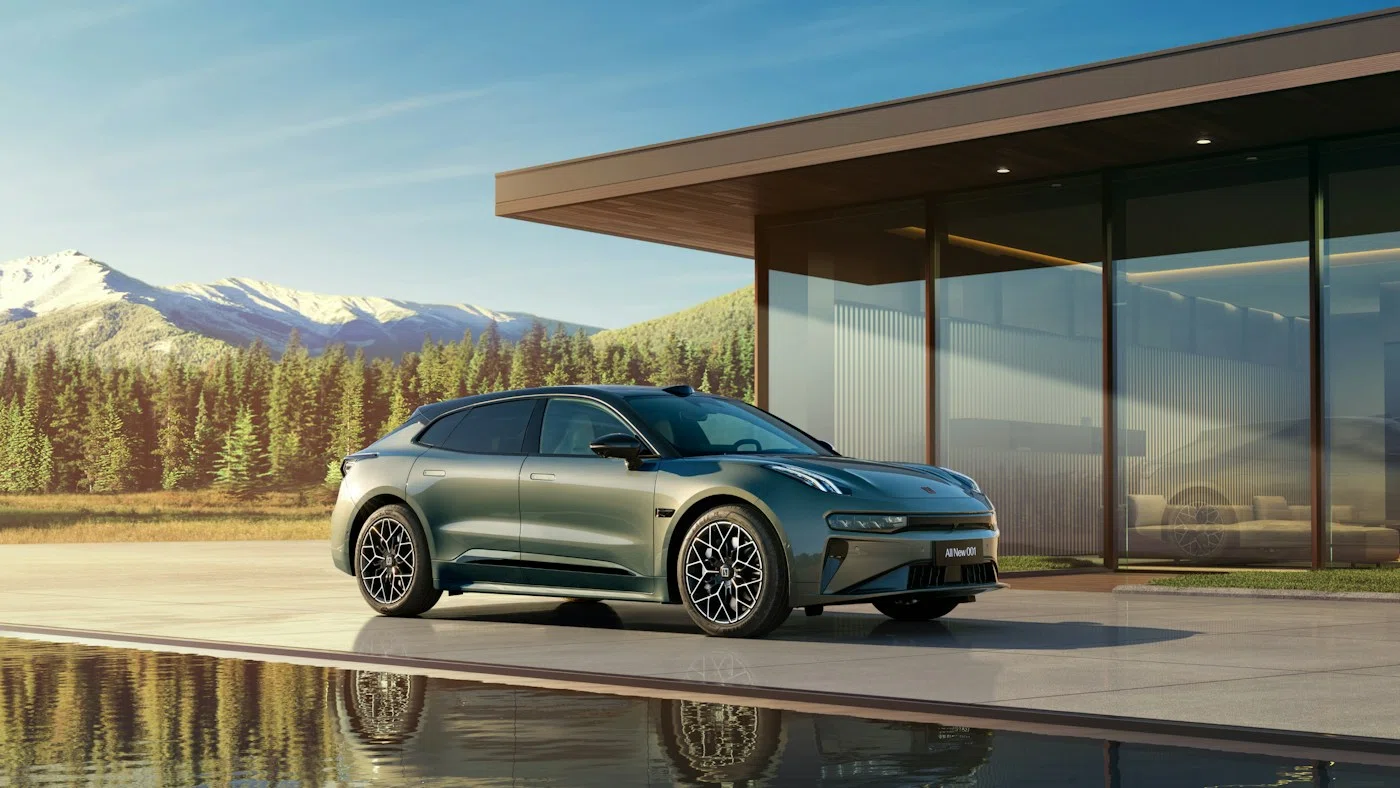
Manufacturer reference image. Controls and equipment vary by vehicle.
Sources checked:
Scope checked: 26 October 2026. China battery examples use the official configuration snapshots retrieved on 25 October 2026. Match the original market, model year, hardware and software before applying a procedure.
Why one winter-range number is misleading
A winter range claim needs a temperature, route, speed, tyre specification, battery version and starting/ending charge. Without them, ‘a ZEEKR 001 does this many kilometres in winter’ is not a useful prediction. Short trips after a cold soak can also differ greatly from a long continuous journey.
Cold affects battery operation while heating and other loads consume energy. Plan from the conditions of your trip, not a fixed percentage copied from another model. This guide contains a calculation example, not an CHINA ZEEKR AUTO road test or a guaranteed winter result.
Check which vehicle you are comparing
- The China configuration snapshot retrieved on 25 October 2026 lists 001 variants with 95 kWh LFP or 103 kWh NMC. An older 001 or an overseas specification is not automatically the same battery.
- The same dated China reference lists 7X with 75 kWh LFP or 103 kWh NMC. Do not substitute an overseas or earlier 100 kWh specification without checking the car.
- 8X and 9X are plug-in hybrids in the referenced China configurations. Their electric range and combined fuel-plus-electric range are different measures.
- CLTC, WLTP and WLTC figures come from different test procedures. Do not use a single conversion factor to turn one into a winter road-trip promise.
Prepare the car before departure
- Check the actual battery version, charge target, tyre pressures specified for the car and planned charging stops. Use the appropriate tyres for the route and conditions.
- If supported, arrange cabin and battery preparation using the vehicle’s documented controls. Cabin warming and battery preconditioning are not necessarily the same setting.
- Where supported and suitable, precondition while connected to a correctly rated charger. Check the resulting state of charge instead of assuming the supply covers all heating demand.
- For 8X or 9X, account for possible engine operation: do not run a combustion engine in an enclosed space. Follow the hybrid’s own preconditioning instructions.
- Clear the vehicle’s required visibility and sensing areas before leaving; do not trade visibility or safe demisting for a range target.
Manual preconditioning and navigation are version-specific
European 001 OS 1.2 release notes describe a manual high-voltage-battery preconditioning control. That is a documented example of a particular software branch, not evidence that every China-market 001 has the same menu. Verify the feature on 7X, X, 009, 007, 007GT and MIX individually.
Selecting a charger as the destination is useful only if that car’s navigation and software support the intended battery preparation. An imported vehicle may not offer the same local routing or charger database. Check the actual indication or the manual rather than assuming navigation has started heating the battery.
A transparent calculation for planning stops
Illustrative assumptions only: usable energy is 80 kWh, departure is at 80%, the desired arrival reserve is 20%, and recent comparable winter consumption is 24 kWh/100 km. Energy available between stops is 80 × (0.80 − 0.20) = 48 kWh. At that consumption, 48 ÷ 24 × 100 = 200 km.
Those numbers are not specifications or measured results for any ZEEKR. Replace them with verified usable energy and your own recent route data, then allow for wind, climbing, detours, queues and an unavailable station. Nominal battery capacity printed in a brochure is not automatically the usable value for this calculation.
Make a charging plan that survives a failed stop
- Confirm connector compatibility, station operating status, access hours, payment method and an alternative stop before setting off.
- Expect charging power to vary with battery temperature, charge level and station conditions; peak brochure power is not a session average.
- If the pack is cold and charging is slow, follow the car’s supported preparation process rather than treating low power alone as a failed battery.
- Keep sufficient energy to reach an alternative. Do not rely on arriving almost empty at the only fast charger on the route.
Create a useful personal winter log
For each comparable trip, note temperature, distance, average speed, tyre setup, starting/ending charge, displayed consumption, cabin heating and whether preparation was used. Keep city, motorway and repeated short-trip results separate. Avoid diagnosing battery degradation from one cold-day range display.
If consumption changes suddenly under comparable conditions, check tyre pressure, loads, route and settings before seeking a vehicle inspection. Persistent warnings, abnormal heating or repeated charging failures need professional assessment. Report the conditions and observations, not just a claim that the car has ‘lost half its battery’.
Sources and version references
- US Department of Energy — winter EV preparation
- ZEEKR Europe — 001 OS 1.2, historical release
- ZEEKR China configuration 001 — snapshot: 25 October 2026
- ZEEKR China configuration 7X — snapshot: 25 October 2026
- ZEEKR China configuration 8X — snapshot: 25 October 2026
- ZEEKR China configuration 9X — snapshot: 25 October 2026
Continue reading
- ZEEKR batteries: LFP, NMC, charge limits and interpreting range
- ZEEKR charging ports: GB/T, CCS2 and choosing an adapter
- ZEEKR OTA updates: check your market, software branch and readiness