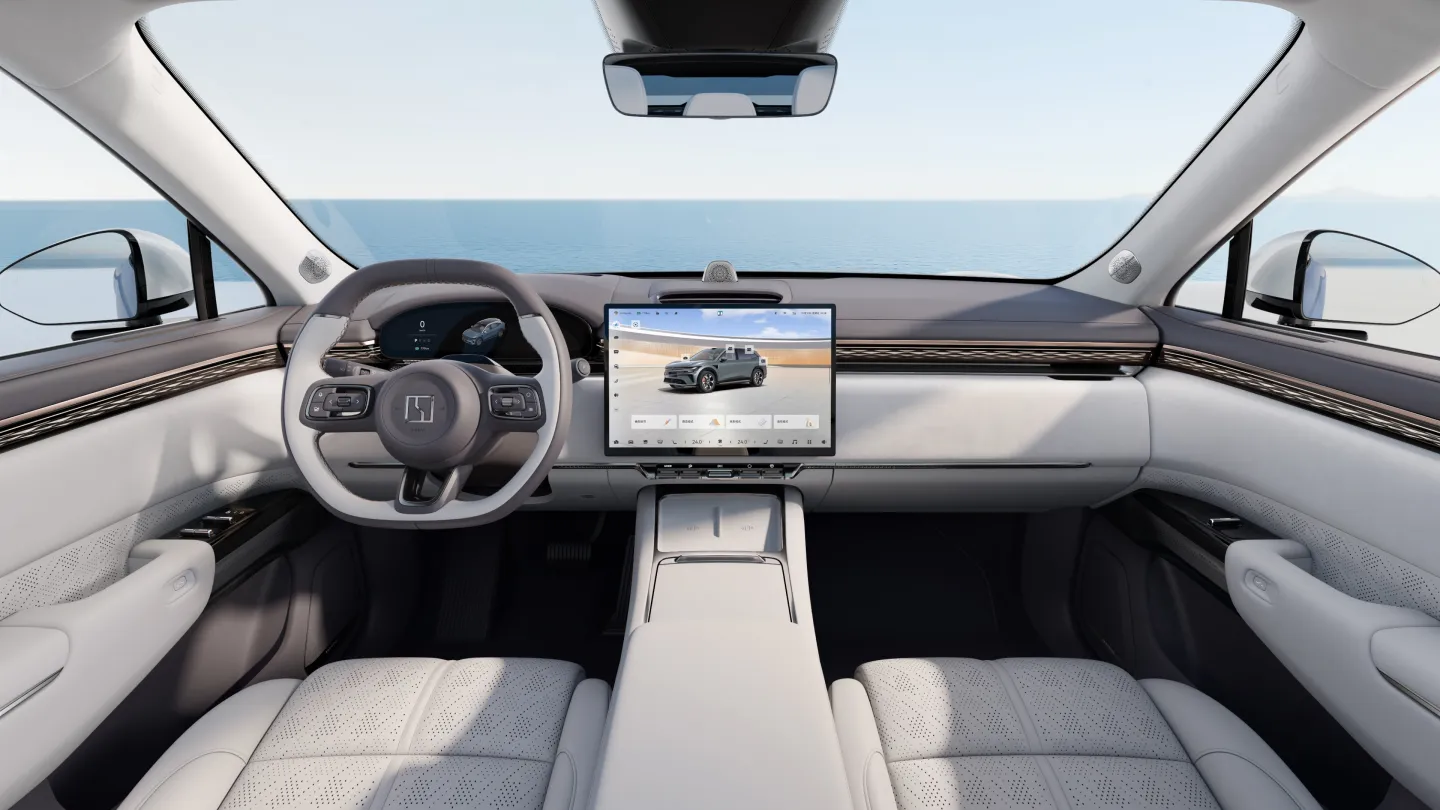
Manufacturer reference image. Controls and equipment vary by vehicle.
Sources checked:
Scope checked: 26 October 2026. China battery examples use the official configuration snapshots retrieved on 25 October 2026. Match the original market, model year, hardware and software before applying a procedure.
Start with the exact warning, not a diagnosis
Record the full message and its context while safely parked. Colour alone does not identify a fault: read the instruction and matching manual. Distinguish a restriction that asks for service from an instruction to stop. If braking, steering, visibility or essential driving information is compromised, or there is smoke, unusual heat, hissing or suspected battery damage, stop safely and seek appropriate assistance rather than testing further.
- Do not drive around to reproduce a safety-critical fault.
- Photograph messages only when stationary or let a passenger record them safely.
Create a timeline before resetting anything
Write down when the issue began, the last normal journey and any recent charging, tyre work, impact, update or long storage. Describe what changed without assuming causation: “started after an update” does not prove the update caused it. Avoid factory resets, fuse removal, battery disconnection and repeated warning clearing before the service provider advises; these actions can erase useful evidence or introduce another fault.
- Record market, model year, exact version, software, mileage, temperature and charge level.
- Keep original photographs and share VIN or personal account information only privately with a trusted provider.
New noise or vibration: observe without a road test
A new vibration, pulling, scraping or rubbing after wheel work or an impact calls for inspection, especially with tyre or steering symptoms. Stop safely and note whether the noise occurred while parked, braking, turning or passing a bump. Do not crawl underneath an unsupported car or touch moving or hot components. Normal equipment sounds and serious faults cannot be distinguished reliably from a short internet description.
- For rapid pressure loss, visible tyre damage or severe vibration, seek assistance rather than continuing.
- Report speed and conditions from the original event without deliberately recreating it.
Poor cooling, heating or windscreen clearing
Separate weak airflow, incorrect air temperature and inability to clear glass. With the car parked, check the displayed mode, set temperature, fan request and unobstructed external air intake if safely visible. Reduced airflow or odour deserves filter and system assessment under the applicable maintenance plan. Do not open refrigerant or cooling circuits. If visibility cannot be maintained, do not continue simply because the vehicle still drives.
- Note whether the symptom affects all vents or one area and whether it changes with fan settings.
- Record outside conditions and selected settings to make a workshop comparison meaningful.
Assistance or camera functions unavailable
Poor weather, dirt or an obstruction may limit sensing, but a persistent warning still needs investigation. When safely parked, inspect accessible camera and sensor surfaces without dismantling parts, then follow the manual’s cleaning instructions. Do not assume cleaning proves a system calibrated or repaired. Driver-assistance availability, maps and functions vary by market and version; they do not replace the driver’s responsibility for control and observation.
- After windscreen, bumper or suspension work, ask whether inspection or calibration is required for the actual vehicle.
- Do not disable a warning or rely on unavailable assistance to finish a journey.
Route the case and send a useful report
Use our dedicated charging, keys, connectivity, screen, tyre and suspension guides for those symptoms rather than repeating random fixes. State the desired outcome: confirm driving safety, book diagnosis or arrange recovery. Chinese 8X/9X are plug-in hybrids in our reference, so engine operation and fuel-related symptoms also matter; a BEV-only checklist is incomplete. A report improves triage but is not a remote diagnosis or warranty promise.
- Report template: initial state → action → exact message → result → repeatability → photos → urgent safety concern.
- Ask the workshop to document findings and approved next steps; keep the final repair and software record.
Sources and version references
- NHTSA — electric and hybrid vehicle safety
- CCOHS — high-voltage battery hazards
- NHTSA — tyre safety and maintenance
- ZEEKR Europe — 001 OS 1.2, historical release
- ZEEKR China configuration 8X — snapshot: 25 October 2026
- ZEEKR China configuration 9X — snapshot: 25 October 2026
Continue reading
- ZEEKR not charging or plug locked: a diagnostic checklist
- ZEEKR owner’s manual and screen: essential controls before driving
- ZEEKR tyres, wheels and tyre pressure: a practical owner checklist
- ZEEKR air suspension and ground clearance: know your version
- ZEEKR towing and roadside recovery: prepare the right information
- ZEEKR maintenance and reduction-gear oil: build the right service plan